
строительство · автоматизация · Китай · робототехника
Bright Dream Robotics: the economics of a construction robot across 900-plus sites
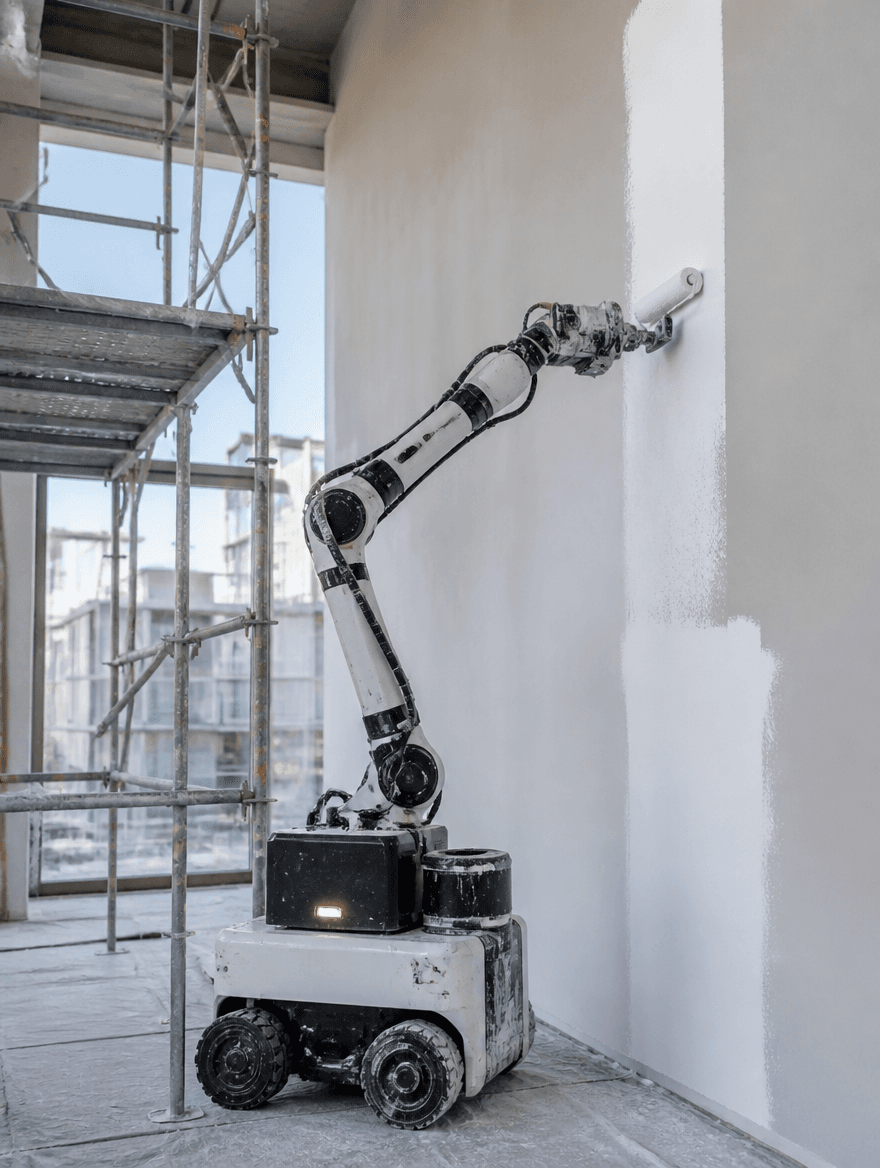
Construction is rarely associated with cutting-edge automation — too many variables, too many non-repeating tasks, too messy and unstructured an environment. But Bright Dream Robotics, a subsidiary of developer Country Garden, is methodically proving otherwise: the company has deployed more than 50 types of construction robots across over 900 construction projects throughout China, as well as in Hong Kong, Macau, Malaysia, and Singapore.
From one developer to international expansion
The company's trajectory itself is telling. Bright Dream Robotics grew up inside Country Garden — meaning it initially solved problems for one specific client rather than trying to sell a universal solution to the whole market from day one. That gave it something robotics startups often lack: real, repeating construction sites to debug hardware under actual working conditions rather than in a lab. Only after solutions had been battle-tested on dozens of sites within the parent company did Bright Dream Robotics take them to the outside market — first within mainland China, then to Hong Kong, Macau, Malaysia, and Singapore.
Economics in concrete numbers, not generalities
The core question for any construction robotics venture is whether it pays off in real money and time, not just in a slide deck. Here Bright Dream Robotics has a vivid example: on a site in Hong Kong, interior-painting robots completed a job in 15-20 minutes that would have taken a human worker several hours. That's not an abstract percentage-point productivity gain — it's a concrete multi-fold reduction in time on a specific, measurable operation, and it's exactly the kind of number that convinces developers to invest in hardware rather than simply hire more painters.
Why painting and similar operations specifically
Interior wall painting is an ideal task for early construction automation: it's repetitive, physically taxing for a human, requires even material application, and takes place in already-completed rooms with predictable geometry. Unlike earthworks or installing complex engineering systems, there are fewer unforeseen variables here, meaning lower technical risk and a faster return on investment.
A flagship project in Guangzhou
One of the company's most notable cases is the Baiyun railway station in Guangzhou — a major infrastructure site where deploying a full set of construction robots, rather than isolated pieces of equipment, showed how automation can scale on a nationally significant project, not just on the developer's standard residential complexes.
What this means for regional construction
Bright Dream Robotics' expansion beyond China — into Hong Kong, Macau, Malaysia, and Singapore — coincides with a broader trend of capital and robotics shifting toward Southeast Asia, visible across other segments of the industry too, from warehouse logistics to service robots. Construction in these countries faces similar pressures: rising labor costs, a shortage of skilled installers, tightening deadlines for project handover. Robotics that has already proven its economics across hundreds of sites in China finds a ready market here.
That said, it's important not to overstate the scale of automation: 50 types of robots across 900-plus sites generally means specific, narrowly specialized operations like painting or tiling, not a fully autonomous build from foundation to handover. The realistic picture for the coming years is gradual replacement of the most routine and injury-prone individual operations, not a wholesale replacement of construction crews.
A developer as a robotics business incubator
Bright Dream Robotics' model is also worth noting as an example of corporate venture-building in general. Rather than relying on an outside robotics startup and bearing the risk of that startup not understanding construction-specific quirks, Country Garden grew its own solution in-house, where it had guaranteed, repeating demand across dozens of sites well before the question of external market entry even came up. That's a fundamentally different maturation path for a technology compared to a typical venture startup, which has to find its first customers from a blank slate while simultaneously developing the product and proving its viability to the market.
It's also worth noting that this model creates a certain risk for Bright Dream Robotics itself: a tight link to a single developer, however large, means dependency on the parent company's financial health. Successful international expansion into Hong Kong, Macau, Malaysia, and Singapore is partly a way to diversify the client base and reduce that dependency, turning an internal developer tool into a standalone robotics business with its own growth trajectory.
Companies supplying robotics for construction and industrial automation can be found in the catalog on the Aura Robotics website.